
TL;DR
- Apple's iOS 27.0.1 update is out with fixes for Face ID and touchscreen issues
- Apple Pay is now rolling out to Axis Bank customers in India
- OpenAI's latest features take direct aim at the app store model
- Apple TV renews French drama 'Carême' for season two
- iFixit's AirPods 5 teardown reveals the first real repairability improvement
- Apple faces renewed scrutiny over removal of ICEBlock from the App Store
- Apple announces when iPhone Duo pre-orders begin
- Early fall Prime Day deals are live with MacBook, AirTag 2, and MagSafe discounts
- Bank of America flags Meta's Muse as a new risk to Apple's services revenue
- Tesla secures $30B in new credit lines to scale Cybercab and Optimus
- Apple updates Final Cut Camera for the iPhone 18 Pro's variable aperture
iOS 27.0.1 Arrives With Fixes for Face ID and Touchscreen Issues

Apple pushed out iOS 27.0.1 this week, a maintenance release that addresses two of the more irritating bugs to hit the iPhone since iOS 27 landed. The update fixes an issue where Face ID would intermittently fail to authenticate after the phone had been idle for extended periods, and a separate touchscreen responsiveness problem that users reported on certain iPhone 17 and iPhone 18 models. The build is available now to all eligible devices via Settings > General > Software Update.
The Face ID bug was particularly annoying because it didn't manifest consistently. Users reported that the sensor would work fine for hours, then suddenly refuse to unlock, forcing a passcode entry. Apple's release notes don't go into technical detail about the root cause, but the pattern suggested a memory management issue in the Secure Enclave handoff rather than a hardware fault. The touchscreen fix is more straightforward — a digitizer calibration drift that affected a small percentage of units.
Why does a point-one update matter? Because iOS 27 was a big release with a lot of under-the-hood changes, particularly around on-device AI processing. When you change that much in the kernel and the neural engine scheduling, you get regressions. Apple's rapid turnaround here — roughly three weeks after the initial release — shows the company is paying attention to post-launch quality in a way that hasn't always been its strong suit. The iOS 13 era still haunts the company's reputation.
For consumers, the practical advice is simple: update. These aren't cosmetic fixes. A failing Face ID makes the phone feel broken, and touchscreen unresponsiveness is the kind of thing that makes people think their hardware is dying. If you've been holding off on iOS 27 because of early-adopter jitters, 27.0.1 is the version that makes the upgrade safe for daily drivers.
Apple Pay Begins Rolling Out to Axis Bank Customers in India

Apple Pay is now rolling out to Axis Bank customers in India, marking another step in Apple's slow but deliberate expansion of its payments platform into the world's most populous country. Axis Bank, one of India's largest private-sector banks, joins the growing list of financial institutions supporting Apple's tap-to-pay service. Customers with eligible Axis Bank cards can now add them to the Wallet app and use them wherever contactless payments are accepted.
India has been a tricky market for Apple Pay. The country's digital payments ecosystem is dominated by UPI, a government-backed system that handles billions of transactions monthly and is deeply integrated into everything from street vendors to major retailers. Apple Pay doesn't replace UPI — it sits alongside it as a card-based contactless option. That's a meaningful distinction, because it means Apple isn't competing head-on with UPI but rather offering an alternative for cardholders who want the Apple ecosystem experience.
The Axis Bank rollout follows similar deals with other Indian banks over the past year. Apple has been methodical here, signing up institutions one by one rather than trying to launch everywhere at once. It's the same playbook the company used in other markets, and it works because each new bank adds a chunk of users without requiring Apple to build infrastructure from scratch. The iPhone's market share in India is still modest — somewhere in the low single digits — but it's growing, particularly among younger, urban professionals.
My take: Apple Pay in India is a long game. The company knows it won't displace UPI, and it doesn't need to. What it needs is for iPhone owners to see Apple Pay as a natural part of using their phone, the same way they see iMessage or the Camera app. Every bank that signs on makes that vision a little more real. Axis Bank is a solid addition, but the real test will be whether Apple can get the state-owned banks on board — that's where the volume is.
OpenAI's Latest Features Take Direct Aim at the App Store Model

OpenAI rolled out a set of new features this week that, taken together, represent a direct challenge to the app store paradigm that Apple and Google have built over the past fifteen years. The updates allow ChatGPT to perform tasks that previously required dedicated third-party apps — things like booking reservations, managing calendars, and interacting with web services through natural language. In other words, OpenAI is positioning ChatGPT as the interface layer that sits between users and the services they need.
The technical mechanism is a combination of improved tool-calling and what OpenAI describes as "agentic workflows." Instead of opening a restaurant's app to make a reservation, you tell ChatGPT what you want, and it handles the interaction. This isn't a new idea — Google and others have been working on similar concepts — but OpenAI's scale and the quality of its models make the threat more immediate. If users can accomplish tasks through ChatGPT without ever opening a dedicated app, the value proposition of those apps diminishes significantly.
Apple's App Store is a $100 billion-plus annual business, and it exists because developers need a distribution channel and users need a trusted place to find software. OpenAI is essentially arguing that the distribution channel can be a conversation. That's a profound shift. It doesn't mean apps disappear overnight — complex software like Photoshop or games with intricate mechanics won't be replaced by a chatbot anytime soon — but it does mean the long tail of simple utility apps is vulnerable.
The editorial angle here is that Apple and OpenAI are on a collision course, and both companies know it. Apple has been integrating AI into Siri and its own services, but it's playing catch-up in some areas. OpenAI, meanwhile, is moving fast and doesn't have a hardware platform to protect. The next two years will determine whether the app store model bends or breaks. For consumers, the upside is convenience — if ChatGPT can actually do these tasks reliably. The downside is that a single company becomes the gatekeeper for even more of your digital life.
Apple TV Renews French Drama 'Carême' for Season Two

Apple TV has renewed its French-language drama 'Carême' for a second season, continuing the streamer's push into international original programming. The show, which premiered earlier this year, follows the story of Antonin Carême, the legendary 19th-century French chef who cooked for royalty and aristocrats. The first season drew strong reviews for its production design and its portrayal of the intersection between cuisine and power politics in post-revolutionary France.
Apple's investment in non-English content is part of a broader strategy to differentiate Apple TV from Netflix and Disney+. While those services chase global subscriber numbers with broad-appeal blockbusters, Apple has positioned itself as the home of prestige programming — the kind of shows that win awards and generate cultural conversation, even if they don't rack up billions of streaming hours. 'Carême' fits that mold perfectly. It's a period drama with high production values, a specific cultural perspective, and a niche that Apple can own.
The renewal also reflects Apple's willingness to stick with shows that don't immediately become hits. In the streaming wars, the temptation is to cancel anything that doesn't perform like 'Ted Lasso' in its first week. Apple has been more patient, giving shows time to find audiences. That patience has paid off with titles like 'Slow Horses' and 'Severance,' which built followings over multiple seasons rather than exploding on day one.
For subscribers, the message is that Apple TV is a long-term play. The service isn't trying to be everything to everyone. It's trying to be the place where you find the show you can't stop talking about. 'Carême' season two will likely continue that tradition. If you haven't watched season one, it's worth your time — especially if you appreciate stories about food, ambition, and the messy business of being talented in a world that doesn't always reward it.
iFixit Teardown of AirPods 5 Reveals First Real Repairability Improvement

iFixit published its teardown of the new AirPods 5 this week, and the headline finding is that Apple has made a genuine, if modest, improvement to repairability. The earbuds now use a more modular internal design that allows the battery to be replaced without destroying the entire unit. It's not a user-serviceable device by any stretch — you still need specialized tools and a steady hand — but it's a step in the right direction for a product category that has historically been disposable.
The specifics matter here. iFixit found that the AirPods 5 battery is now held in place with screws rather than being soldered or glued directly to the chassis. That means a repair technician can remove and replace the battery with far less risk of damaging the driver or the antenna assembly. The charging case, too, has seen improvements, with a design that makes it easier to access the internal components without cracking the shell. iFixit gave the AirPods 5 a repairability score of 4 out of 10 — still low, but up from the 0 or 1 that previous generations received.
Why does this matter? Because earbuds are one of the most discarded consumer electronics products on the planet. Their batteries degrade after two or three years, and when they do, most people throw them away and buy new ones. That's bad for the environment and bad for consumers' wallets. Apple has been under pressure from right-to-repair advocates and regulators, particularly in the European Union, to make its products more repairable. The AirPods 5 changes are a response to that pressure, even if Apple won't frame it that way.
My take: this is progress, but it's baby steps. A 4 out of 10 is still a failing grade in most contexts. Apple could do much more — socketed batteries, replaceable ear tips with standardized connectors, published repair manuals. But the company is moving in the right direction, and that's worth acknowledging. If you're in the market for new earbuds, the AirPods 5 are now a slightly better long-term investment than their predecessors. Slightly.
Apple Faces Renewed Scrutiny Over ICEBlock Removal from App Store

Apple is facing renewed scrutiny this week over its decision to remove ICEBlock, an app designed to help immigrants and their families navigate interactions with U.S. Immigration and Customs Enforcement. The app, which provided information about legal rights and reporting tools, was pulled from the App Store earlier this year. Critics argue that the removal was politically motivated, pointing to Apple's guidelines that allow apps providing legal information while prohibiting those that facilitate illegal activity — a distinction that ICEBlock's developers say they never crossed.
The renewed attention comes as civil liberties organizations and some lawmakers have begun asking pointed questions about Apple's content moderation practices. The core issue is one of consistency. Apple has removed apps for a variety of reasons over the years, from gambling to cryptocurrency to political content. But when the removals intersect with sensitive political topics, the company's opaque review process becomes a liability. Apple rarely explains its decisions in detail, citing developer confidentiality, but that silence fuels suspicion.
Apple's official position is that ICEBlock violated App Store guidelines related to safety and the facilitation of potentially harmful activities. The company has not elaborated publicly. ICEBlock's developers maintain that the app was purely informational and that its removal was a response to political pressure rather than a genuine policy violation. Without transparency from Apple, it's impossible to know for certain. What is clear is that the episode has damaged Apple's reputation among some developers and users who see the company as increasingly willing to bend to political winds.
The broader context here is that Apple's App Store is a gatekeeper with enormous power. When it removes an app, it can effectively erase it from the digital lives of millions of people. That power comes with responsibility, and the company has historically been reluctant to explain how it exercises that responsibility. For consumers, the takeaway is that the apps on your phone are there at Apple's discretion. That's a reality worth understanding, even if you never run into it directly.
Apple Announces When iPhone Duo Pre-Orders Begin

Apple has announced the pre-order timeline for the iPhone Duo, the company's first dual-screen iPhone. Pre-orders will begin on October 9, with the first units shipping the following week. The announcement ends months of speculation about when the device would actually be available to consumers, and it gives Apple a chance to build momentum heading into the holiday shopping season.
The iPhone Duo is a significant departure for Apple. It features two displays — a primary screen and a secondary e-ink display on the back — that work together in ways the company has been developing for years. The e-ink panel is designed for always-on information: notifications, calendar events, and a persistent clock. It's a power-saving feature that Apple has positioned as a way to reduce screen time on the main display while keeping essential information visible.
The pre-order date matters because it gives us a clearer picture of Apple's production ramp. Companies typically announce pre-order dates only when they're confident in their supply chain. The fact that Apple is going with an October 9 date suggests the company has enough inventory to meet initial demand, or at least enough to avoid the kind of month-long delays that plagued some previous launches. That's a good sign for anyone hoping to get one before the holidays.
Editorially, the iPhone Duo is the most interesting thing Apple has done with the iPhone in years. The e-ink display is a genuinely new idea, not just a spec bump. Whether it resonates with consumers is an open question — dual-screen phones have failed before, and Apple's implementation will need to be flawless to justify the likely premium price. But it's nice to see Apple taking a risk. If you're planning to pre-order, mark October 9 on your calendar and be ready to move fast. The initial batch will probably sell out.
Early Fall Prime Day Deals Go Live With MacBook, AirTag 2, and MagSafe Discounts

Amazon's early fall Prime Day event kicked off this week, bringing a wave of discounts on Apple hardware and accessories. The deals include price cuts on MacBook models, the new AirTag 2, MagSafe charging gear, smart TVs, and smart speakers. If you've been waiting for a reason to upgrade your setup, this is one of the better opportunities of the year outside of Black Friday.
The MacBook discounts are the headline. Several configurations of the MacBook Air and MacBook Pro are seeing reductions of $100 to $200, depending on the model. The AirTag 2, which launched earlier this year with improved precision finding and a louder speaker, is also on sale — a rare discount for a product that Apple rarely marks down. MagSafe accessories, including chargers and cases, are seeing similar treatment, which is good news for anyone who bought an iPhone 18 or iPhone Duo and needs to kit it out.
What makes this Prime Day interesting is the timing. It's coming right after Apple's September product launches and right before the holiday shopping season. Amazon is clearly trying to capture early holiday spending and clear out inventory before the next wave of products arrives. For consumers, that means genuine deals rather than the artificial discounts that sometimes populate these events. The AirTag 2 discount, in particular, is worth noting because Apple accessories almost never go on sale this soon after launch.
My advice: if you need a new MacBook or you've been eyeing MagSafe gear, this is a good time to buy. But don't buy something just because it's on sale. Prime Day discounts are real, but they're not so deep that you should abandon your budget. Make a list of what you actually need, check the prices against historical lows, and then decide. The deals will be live for a few more days, so you have time to think.
Bank of America Flags Meta's Muse as New Risk to Apple's Services Revenue

Bank of America analysts published a note this week warning that Meta's new AI assistant, Muse, represents a growing risk to Apple's services revenue. The concern is straightforward: if Meta's AI can handle tasks that users currently rely on App Store apps for, and if it does so through Meta's own platforms, Apple loses a cut of the transaction. It's the same dynamic that OpenAI is creating, but Meta's reach across Instagram, WhatsApp, and Facebook gives it a different kind of leverage.
Apple's services business — which includes the App Store, Apple Music, iCloud, and more — is the company's second-largest revenue segment and its fastest-growing. Investors love it because it's high-margin and recurring. Anything that threatens that growth gets attention on Wall Street. Bank of America's note is essentially saying that the AI assistants being built by Meta and others could disintermediate the App Store in the same way that streaming disintermediated cable bundles.
The specific mechanism is worth understanding. Right now, if you want to order food, you open a delivery app. If you want to book a hotel, you open a travel app. Those apps pay Apple a commission on digital transactions. But if you can just tell Muse to order your usual from the Thai place down the street, and Muse handles it through a direct integration with the restaurant, there's no app and no commission. Multiply that across thousands of daily tasks, and the App Store's transaction volume takes a hit.
Is this an immediate threat? No. Apple's services revenue is still growing, and the App Store isn't going anywhere in the next year. But the direction of travel is clear. AI assistants are becoming the new interface layer, and whoever controls that layer controls the commerce that flows through it. Apple knows this — it's why the company is investing so heavily in Siri and on-device AI. The question is whether Apple can move fast enough to defend its turf. For consumers, the shift could mean more convenience but also more consolidation of power in the hands of a few AI providers.
Tesla Secures $30B in New Credit Lines to Scale Cybercab and Optimus

Tesla announced this week that it has secured $30 billion in new credit lines, a massive infusion of capital that the company says will be used to scale production of the Cybercab and Optimus robot. The credit lines come from a consortium of banks and give Tesla significant financial flexibility as it ramps up two of its most ambitious projects. The Cybercab, Tesla's purpose-built autonomous taxi, and Optimus, its humanoid robot, are both central to CEO Elon Musk's vision of Tesla as more than a car company.
The scale of the credit lines is notable. $30 billion is more than Tesla's entire annual capital expenditure budget in recent years. It signals that the company is preparing for a major manufacturing push, likely including new factories or significant expansions of existing ones. The Cybercab, in particular, will require a different kind of production line than Tesla's current vehicles — it's designed from the ground up for autonomy, with no steering wheel or pedals, which means new assembly processes and new regulatory approvals.
The Optimus program is even more speculative. Tesla has shown prototypes, but the robot is not yet in mass production, and the use cases remain largely theoretical. Musk has claimed that Optimus could eventually be Tesla's most valuable product, but that's a long way off. The credit lines give Tesla room to keep investing without diluting shareholders or burning through its cash reserves. It's a smart financial move, even if the underlying projects are uncertain.
What does this mean for consumers? In the short term, not much. The Cybercab and Optimus are years away from being products you can buy. But the investment signals that Tesla is serious about autonomy and robotics, and that it has the backing to pursue them aggressively. If you're an investor, the credit lines are a bullish sign. If you're a consumer, they're a reminder that the automotive and robotics industries are converging, and Tesla intends to be at the center of that convergence.
Apple Updates Final Cut Camera for iPhone 18 Pro's Variable Aperture

Apple released an update to Final Cut Camera this week that adds support for the iPhone 18 Pro's variable aperture. The feature, which was introduced with the iPhone 18 Pro earlier this year, allows the camera's lens to physically adjust its aperture — just like a traditional camera lens — giving filmmakers and photographers control over depth of field and exposure in ways that were previously impossible on a phone. The Final Cut Camera update unlocks that capability for video capture.
Variable aperture on a smartphone is a big deal. Most phone cameras have a fixed aperture, which means the only way to control depth of field is through software-based portrait modes. Those modes work well for stills but are less reliable for video, especially when subjects are moving. A physical aperture gives you real optical control. You can open it up to f/1.4 for a shallow depth of field, or stop it down to f/4 for a sharper, more evenly focused image. It's the kind of control that professional cinematographers expect, and it's now available on a phone.
The Final Cut Camera update is significant because it's the first Apple app to fully leverage the hardware. Third-party apps will likely follow, but Apple's own software sets the standard. The update also includes improved focus peaking, a new waveform monitor for exposure, and support for external SSD recording at higher bitrates. Taken together, these features make the iPhone 18 Pro a more credible tool for professional video work — not a replacement for a cinema camera, but a legitimate B-camera or even A-camera for certain projects.
The editorial take here is that Apple is slowly but surely turning the iPhone into a serious filmmaking device. The hardware has been capable for years; the software is catching up. If you're a filmmaker who's been curious about shooting on an iPhone, the iPhone 18 Pro with the updated Final Cut Camera is the most compelling option yet. It won't replace your RED or your ARRI, but it might replace your backup. And for a lot of creators, that's enough.
Check out the NexTECH 65W GaN Fast Charger with Global Travel Adapter for your own setup — charge your iPhone, MacBook, and AirPods at full speed wherever you are.
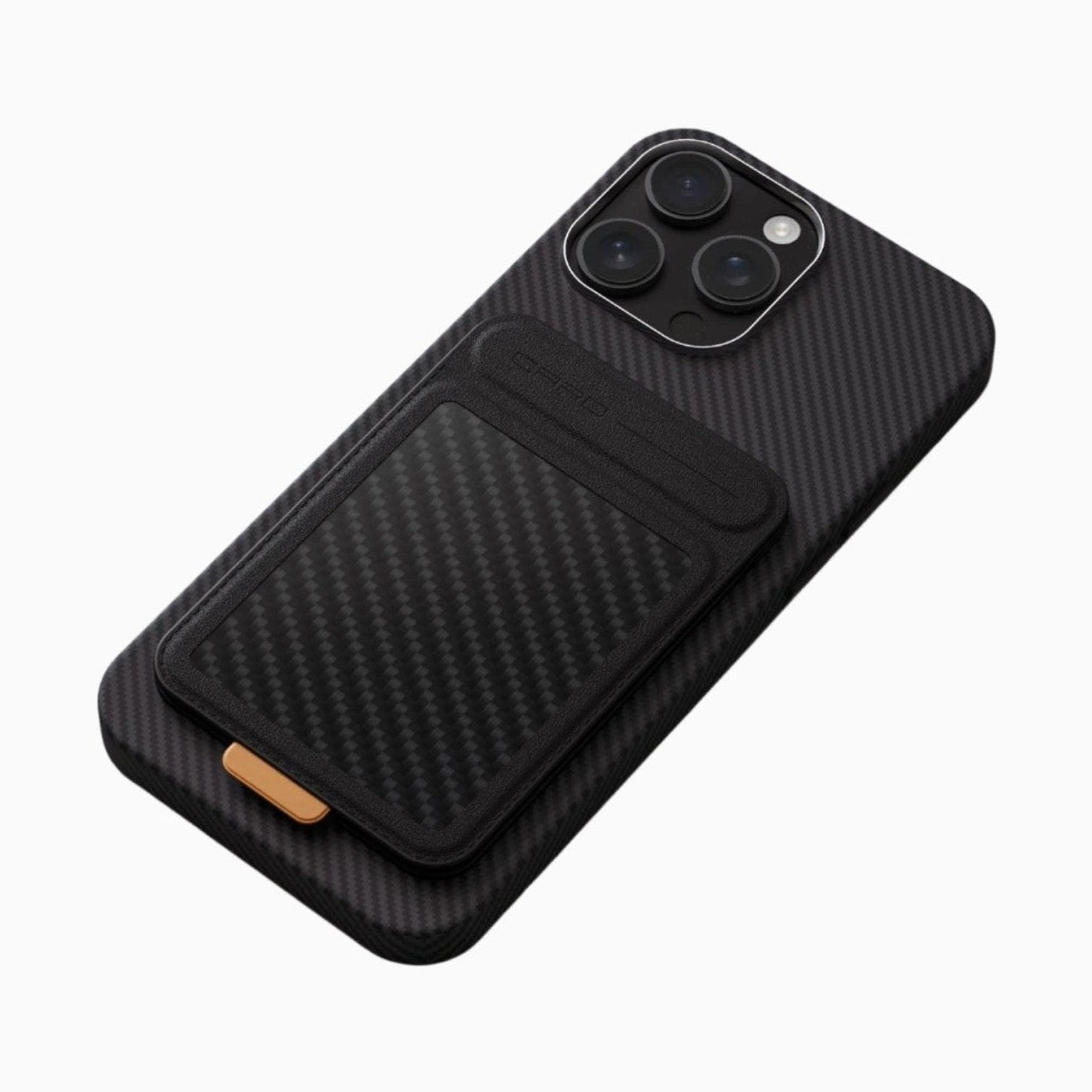
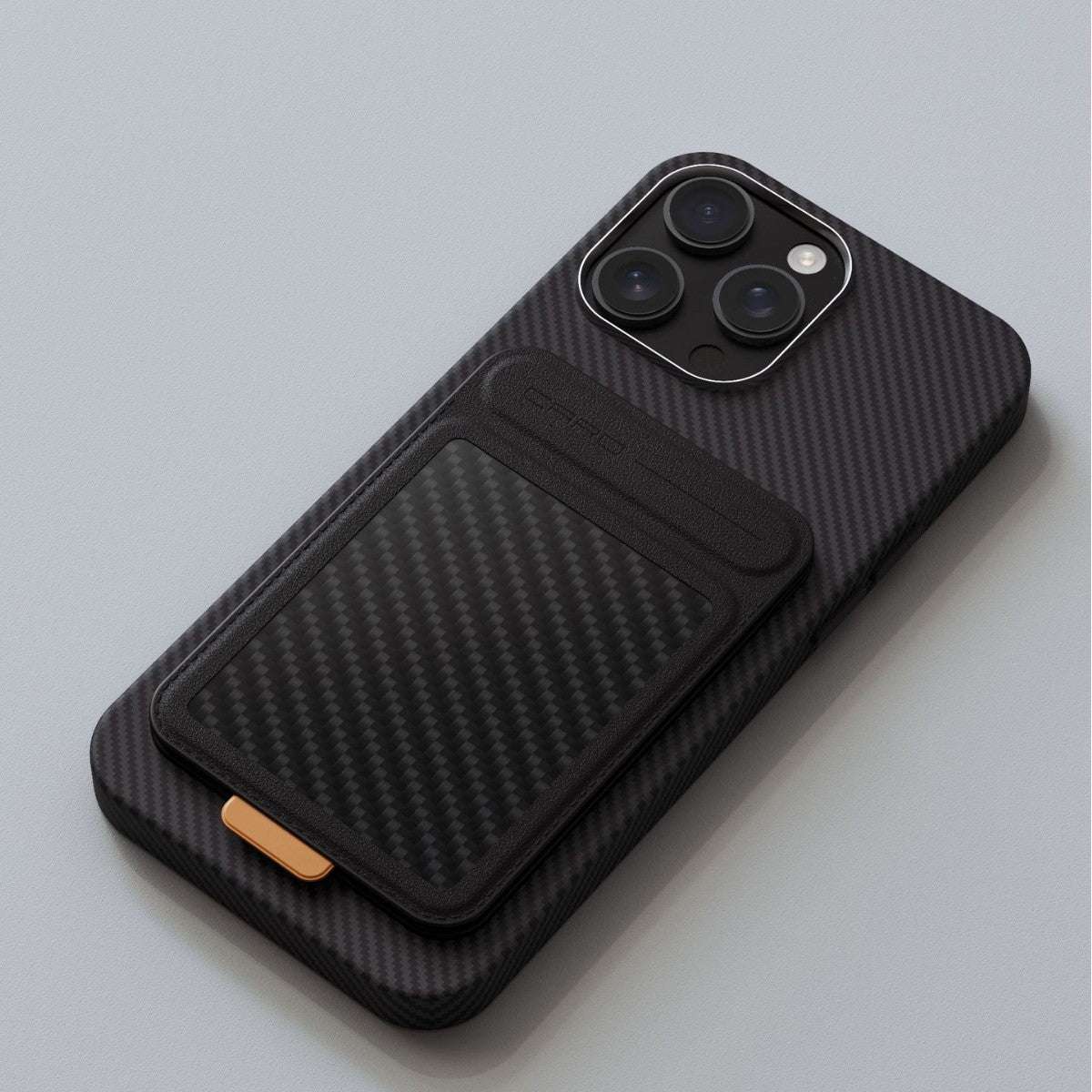
And if you're grabbing a new iPhone Duo or iPhone 18 Pro, the NexTECH Metal Frame MagSafe Case with Lens Cover keeps your phone protected while staying MagSafe-compatible for all your accessories.