
TL;DR
- Apple's smart home ambitions crystallize with an LG partnership for a doorbell, smart lock, and thermostat
- iFixit's teardown of Apple Watch Series 12 and Ultra 4 reveals a mixed repairability picture
- Tim Cook offloads nearly $63.9 million in Apple stock as Q4 earnings land on November 2
- Fall Prime Day slashes $150 off the new Mac mini and $200 off MacBook Air
- Roborock discounts its robot vacuum lineup for the same shopping event
- Crossy Road returns as an Apple Arcade exclusive
- British comedy 'Small Prophets' lands on Apple TV
- Lambda raises $4B ahead of a planned IPO as AI infrastructure spending accelerates
- Silicon Valley's 'AI wunderkind' launches Underdog, a privacy-first assistant
- Amazon's ad-targeting categories raise eyebrows after a viral 'flat buttocks' discovery
Apple Teams With LG on a Smart Home Trio: Doorbell, Lock, and Thermostat

Apple has reportedly partnered with LG to build three core smart home products: a video doorbell, a smart lock, and a thermostat. The report, which surfaced this week from multiple outlets including 9to5Mac and TechCrunch, describes a deliberate hardware push into the home that goes well beyond the HomePod and Apple TV boxes currently anchoring Apple's smart home strategy. LG would handle manufacturing, while Apple supplies the software stack, likely built around HomeKit, Matter, and a deeper integration with Siri.
This matters because Apple has been the odd one out in the smart home for years. Amazon owns the low end with Ring and Blink, Google has Nest, and Samsung's SmartThings ecosystem has quietly become the default for Android households. Apple's approach — premium pricing, privacy-first processing, and tight integration with iPhone and Apple Watch — has never translated into meaningful market share. A first-party doorbell and lock would change that overnight, because these are the two categories where HomeKit users have complained loudest about a lack of good options.
The choice of LG as a partner is also notable. LG has been steadily building out its ThinQ smart home platform, and a manufacturing deal with Apple would give it volume and credibility without forcing it to compete directly on software. It's a classic Apple playbook move: find a partner with manufacturing scale, control the experience layer, and let the hardware be invisible. If the products ship in 2027, expect them to be priced at a premium and sold as a bundle with an updated HomePod or Apple TV acting as the hub.
For consumers, the real question is whether Apple can do for the smart home what it did for the smartwatch — arrive late, charge more, and still win on integration. The doorbell and lock categories are notoriously fragmented, with apps for every brand and inconsistent support for Matter. A coherent Apple alternative would be welcome, but only if it doesn't lock buyers into yet another walled garden. The privacy angle is the strongest card Apple can play here, and it should lean into it hard.
iFixit Tears Down Apple Watch Series 12 and Ultra 4: Mixed Repairability Results

iFixit published its teardown of the Apple Watch Series 12 and Apple Watch Ultra 4 this week, and the results are a mixed bag. The Series 12 earned improved marks for its display and battery replacement process, which iFixit described as more straightforward than previous generations, while the Ultra 4 retained its reputation as a sealed brick that resists any meaningful user repair. The teardown also noted that Apple has continued to use proprietary screws and adhesive in ways that make independent repair difficult without specialized tools.
Repairability matters more than ever as right-to-repair legislation spreads across the US and Europe. Apple has been slowly improving its position — the self-service repair program, parts pairing changes, and the introduction of more modular components — but the Watch line has always lagged behind the iPhone. The Series 12's improvements suggest Apple is listening, at least on its highest-volume wearable. The Ultra 4's stubbornness is less surprising given its rugged, dive-rated design, but it still leaves a $799 device that's effectively disposable once the battery degrades.
From a consumer perspective, the practical impact is straightforward: if you own a Series 12, a battery swap is now more likely to be affordable and quick. If you own an Ultra 4, you're still looking at a full device replacement or an expensive out-of-warranty service. That's a meaningful difference for anyone who plans to keep a watch for four or five years, which is increasingly common as Apple continues to support older models with watchOS updates.
The broader signal here is that Apple's repairability story is improving unevenly. The company deserves credit for the Series 12 changes, but the Ultra line needs a rethink. A premium product with a premium price should not be the hardest one to service. iFixit's scorecards are a useful public pressure mechanism, and Apple has historically responded to them. Expect the Ultra 5 to be the real test of whether this is a trend or a one-off.
Tim Cook Sells Nearly $63.9 Million in Apple Stock

Apple CEO Tim Cook sold approximately $63.9 million worth of Apple shares this month, according to regulatory filings. The sale was executed under a pre-arranged Rule 10b5-1 trading plan, which is the standard mechanism executives use to avoid accusations of trading on insider information. Cook retains a substantial stake in the company, and this is not his first large sale — he has periodically liquidated portions of his holdings as part of personal financial planning.
Still, the timing is notable. Apple just wrapped its fiscal year, and Q4 2026 earnings are set for November 2. A sale of this size always draws attention, even when it's pre-planned, because investors look for signals in executive behavior. The company's stock has been volatile through 2026, buffeted by AI spending concerns, slower iPhone upgrade cycles in some regions, and competitive pressure in China. Cook's sale is unlikely to move the needle on its own, but it feeds a narrative that even Apple's leadership is hedging.
Context matters here: Cook has led Apple since 2011 and has overseen the company's transformation into a services-driven giant with a market cap that has repeatedly flirted with $4 trillion. His compensation is heavily tied to stock performance, and selling shares is a normal part of diversifying a concentrated position. The 10b5-1 plan was almost certainly set up months in advance, which means the sale tells us more about Cook's personal financial planning than about his confidence in Apple's near-term prospects.
For retail investors, the takeaway is to avoid reading too much into a single filing. What matters more is the November 2 earnings call, where Apple will report on iPhone 17 demand, services growth, and its AI roadmap. If those numbers disappoint, the stock sale will look prescient in hindsight. If they impress, it will be forgotten within a week. That's the nature of executive trading news — loud in the moment, quiet in the long run.
Fall Prime Day: Mac mini $150 Off, MacBook Air $200 Off

Amazon's Fall Prime Day event delivered some of the best Mac discounts of the year this week, with the new Mac mini dropping $150 and the MacBook Air falling by $200. The deals covered multiple configurations, including the M4-powered Mac mini and the 13-inch and 15-inch MacBook Air models. Several iPad and Apple Watch models also saw discounts, though the Mac deals were the headline attraction for Apple-focused shoppers.
The Mac mini at $150 off is particularly notable because it's Apple's most affordable desktop and a popular entry point for developers, home theater enthusiasts, and anyone who wants a small, quiet machine. The M4 chip brought a significant performance bump over the M1 and M2 generations, and at a discount it becomes one of the best value propositions in Apple's lineup. The MacBook Air discount is equally aggressive — $200 off brings the 13-inch model close to the $899 mark, which is territory it rarely visits outside of back-to-school season.
This sale matters because Apple hardware rarely gets discounted this steeply by authorized retailers. Apple's pricing discipline is legendary, and third-party discounts are usually modest. Fall Prime Day has become a reliable exception, giving consumers a legitimate reason to buy now rather than wait for Black Friday. The timing is also strategic: Apple just refreshed several products, so retailers are clearing inventory and Amazon is using Apple as a loss leader to drive Prime subscriptions.
For anyone on the fence about a Mac purchase, this is a genuinely good moment. The M4 Mac mini is a future-proof machine for most tasks, and the MacBook Air remains the best ultraportable for the money. Waiting for Black Friday might yield similar prices, but it might not — and stock on discounted configurations tends to disappear quickly. If you need a new Mac, the math favors buying during this window rather than gambling on a marginally better deal in November.
Roborock's Fall Prime Day Sale Cuts Deep on Robot Vacuums

Roborock joined the Fall Prime Day fray with a sweeping sale across its robot vacuum and mop lineup. The discounts covered flagship models like the S8 MaxV Ultra as well as mid-range options, with some units seeing price cuts of several hundred dollars. The sale positioned Roborock as the premium alternative to cheaper brands, emphasizing its self-emptying docks, LiDAR navigation, and mopping systems that lift and vibrate to handle hard floors.
Robot vacuums have become a surprisingly competitive category, with Roborock, iRobot, Dreame, and Eufy all fighting for the same living room corner. Roborock's edge has been its navigation software and the reliability of its docks, which handle dust emptying and mop washing without user intervention. The Fall Prime Day discounts make those premium features more accessible, which is important as the category matures and consumers become more educated about the difference between a $200 vacuum and a $1,000 one.
The timing is also telling. Amazon uses Prime Day events to drive category adoption, and robot vacuums are a classic impulse purchase when the price is right. Roborock's participation suggests it sees the event as a volume play rather than a margin play. For consumers who have been waiting for a deal, this is the moment — the gap between mid-range and flagship has narrowed enough that the flagship is often the smarter buy.
My take: if you have pets or a mix of hard floors and carpet, the self-emptying and mop-washing features are worth the premium. If you have a small apartment with mostly hard floors, a mid-range model is fine. Either way, buying during a Prime Day event is almost always better than buying at full price, and Roborock's sale this week was one of the better ones in the category.
Crossy Road Returns as an Apple Arcade Exclusive

A new Crossy Road game was announced this week as an Apple Arcade exclusive. The original Crossy Road was a phenomenon when it launched in 2014, racking up hundreds of millions of downloads with its endless hopper gameplay and charming voxel art. The new entry brings the same core loop but adds fresh mechanics, new characters, and the ad-free, microtransaction-free experience that Apple Arcade promises.
Apple Arcade has struggled to maintain momentum since its 2019 launch. The service has a solid library, but it lacks the cultural moments that drive subscriptions — the kind of game everyone talks about for a week. Crossy Road is a smart bet because it's a known quantity with a built-in audience, and making it exclusive gives Apple a reason to promote the service. It's not a system-seller on the level of a new Zelda, but it's a recognizable name that appeals to casual players.
The exclusivity also highlights Apple's broader strategy: rather than competing with consoles, Arcade targets the massive casual audience that plays on iPhone and iPad. Crossy Road fits that mold perfectly. It's a game you can pick up for five minutes, and the absence of ads and in-app purchases makes it feel premium in a way that free-to-play competitors don't.
For subscribers, this is a nice addition to the catalog. For Apple, it's a reminder that Arcade's value proposition is strongest when it offers games you can't get anywhere else. The service doesn't need a killer app to survive — it needs a steady stream of recognizable, well-made exclusives. Crossy Road is exactly that.
'Small Prophets' Brings Acclaimed British Comedy to Apple TV

The acclaimed British comedy series 'Small Prophets' is now available on Apple TV. The show, which has drawn praise for its sharp writing and ensemble cast, represents another step in Apple's push to build a library of prestige international content. Apple TV has leaned heavily into sci-fi and drama with hits like 'Severance' and 'Silo,' but comedy has been a weaker spot, and 'Small Prophets' fills a gap.
Apple's strategy with Apple TV has been to fund high-quality, creator-driven projects rather than chase volume. That approach has produced critical darlings but a relatively small library compared to Netflix or Prime Video. Adding British comedies is a smart move because they tend to travel well and attract a specific, loyal audience that values writing over spectacle. 'Small Prophets' fits that mold — it's the kind of show that generates word-of-mouth rather than marketing spend.
The broader streaming landscape is consolidating, and Apple TV is positioning itself as the premium option. It doesn't have the back catalog of Netflix or the sports rights of Amazon, but it has a reputation for quality that matters to subscribers who are cutting back on the number of services they pay for. A well-reviewed comedy is a low-cost way to add value and reduce churn.
For viewers, this is a welcome addition. Apple TV's comedy slate has been thin, and 'Small Prophets' gives subscribers a reason to open the app between big drama releases. If Apple can keep adding shows like this, it will strengthen its case as the service you keep when you're trimming subscriptions.
Lambda Raises $4B Ahead of Planned IPO as AI Infrastructure Booms

AI computing startup Lambda is raising $4 billion ahead of a planned IPO, according to reports this week. The company provides GPU cloud infrastructure and hardware for AI training and inference, and the raise reflects the insatiable demand for compute that has defined the AI boom. Lambda's timing is aggressive but logical — it wants to scale before going public, and the market for AI infrastructure shows no signs of cooling.
Lambda competes with the major cloud providers — AWS, Google Cloud, Azure — as well as specialized GPU clouds like CoreWeave. Its pitch is flexibility and cost: developers can rent high-end GPUs by the hour without committing to a long-term contract with a hyperscaler. That model has resonated with startups and research labs that need bursts of compute but can't afford to build their own clusters.
The $4 billion raise is a staggering number for a company that was relatively unknown a few years ago. It signals that investors believe AI infrastructure is a durable market, not a bubble. The planned IPO would give Lambda a war chest to expand data centers and compete on price, which is good news for anyone who rents GPUs. More competition means lower costs, and lower costs mean more AI experimentation.
For consumers, this story matters indirectly. Every AI feature you use — translation, photo editing, voice assistants — depends on cheap, abundant compute. Companies like Lambda are the picks and shovels of the AI gold rush, and their success determines how quickly AI capabilities reach everyday devices. A $4 billion raise is a bet that the demand curve keeps going up. So far, it has.
Silicon Valley's 'AI Wunderkind' Launches Underdog, a Privacy-First Assistant

A Silicon Valley developer described as an 'AI wunderkind' launched Underdog this week, a personal AI assistant that positions itself as the most private competitor to Instinct and Muse. The product emphasizes on-device processing, end-to-end encryption, and a clear policy of not training on user data. It enters a crowded field of AI assistants, but the privacy angle is a genuine differentiator as concerns about data collection grow.
Privacy has become a major selling point in the AI assistant market. Mainstream assistants from Google, Amazon, and Apple have all faced questions about how they handle voice recordings and personal data. Underdog's pitch is that it doesn't need your data to be useful — it processes requests locally where possible and encrypts everything else. That's a technically difficult promise to keep, but if Underdog delivers, it could attract users who are uncomfortable with the status quo.
The competitive landscape is brutal. Instinct and Muse have significant head starts, and Apple's Siri, Google Assistant, and Amazon Alexa are free and deeply integrated into their ecosystems. Underdog will need to be meaningfully better, not just more private, to gain traction. The launch suggests the team believes privacy is enough of a wedge to build a business, which is a bet on growing consumer awareness of data practices.
My take: privacy-first AI is a real market, but it's a niche one. Most users trade data for convenience without much thought. Underdog's success will depend on whether it can match the convenience of mainstream assistants while offering privacy as a bonus rather than a trade-off. If it can, it has a shot. If privacy comes at the cost of capability, it will remain a niche product for the already-concerned.
Amazon's Ad Categories Raise Eyebrows After 'Flat Buttocks' Discovery

A viral story this week revealed that Amazon's advertising platform categorizes users in ways that are both granular and deeply personal — including a category that suggests the system believes you have 'flat buttocks.' The discovery came from a user who downloaded their Amazon data and found the label among dozens of other targeting categories. Amazon has not commented publicly, but the story spread quickly because it illustrates how much data the company collects and how specific its inferences can be.
Amazon's ad business is enormous — it's the third-largest digital advertising platform after Google and Meta — and its targeting is powered by purchase history, browsing behavior, and demographic data. The 'flat buttocks' label likely came from a combination of purchases, searches, and third-party data, and it was probably used to serve ads for shapewear or fitness products. The specificity is what made the story go viral: it's one thing to know Amazon tracks your shopping, another to see it infer something about your body.
The story matters because it highlights the opacity of data-driven advertising. Most users have no idea what categories they're in or how those categories are used. Amazon offers a way to download your data, but the format is not user-friendly, and the categories are not explained. This is a transparency problem that regulators are starting to notice, particularly in the EU under the Digital Services Act.
For consumers, the practical takeaway is to check your ad settings and download your data if you're curious. You can't opt out of all targeting, but you can limit some of it. The bigger issue is that targeted advertising is the economic engine of the modern internet, and it's not going away. The best you can do is understand it and decide how much you're willing to share. Stories like this one are a reminder that the answer is usually 'more than you think.'
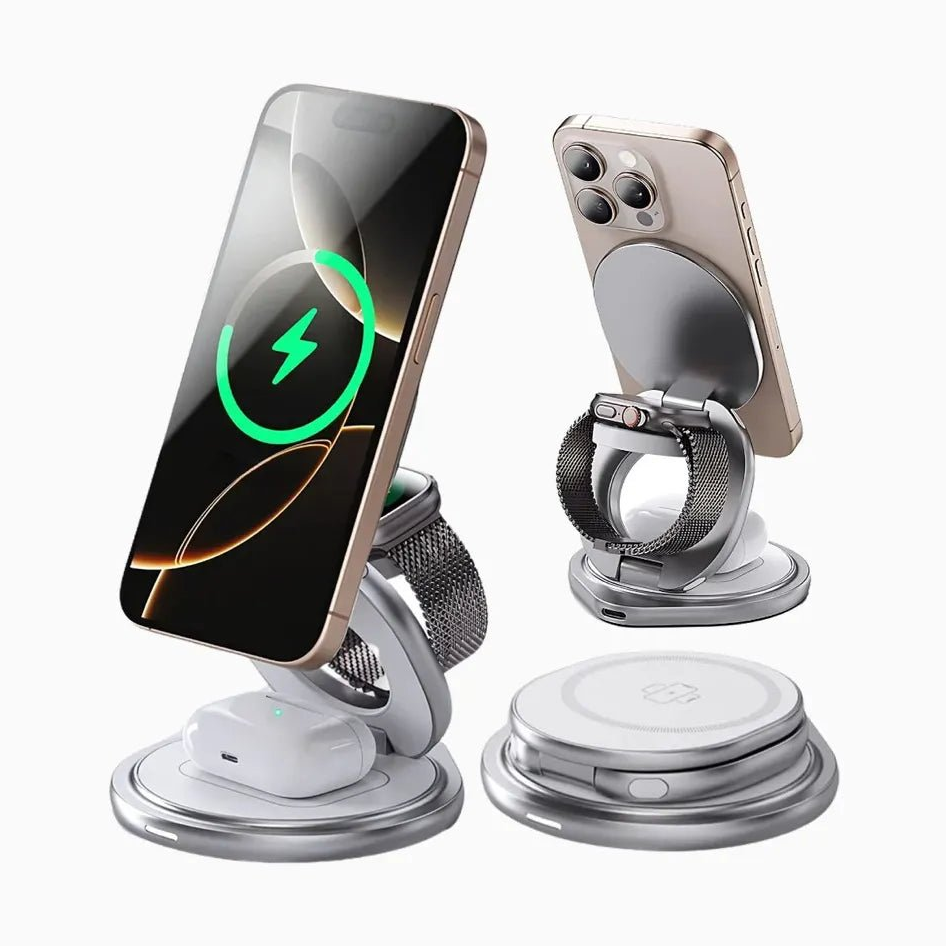
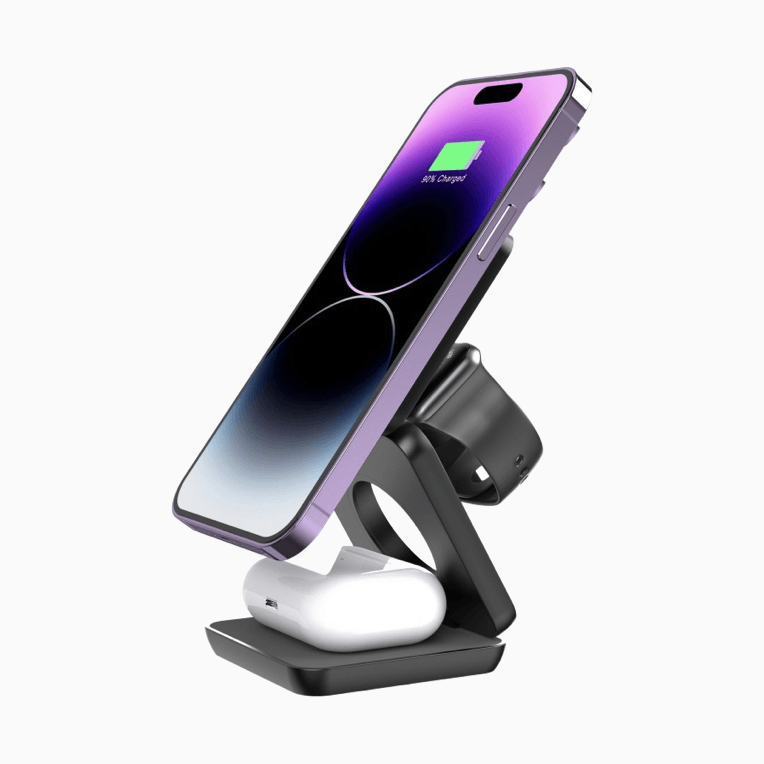
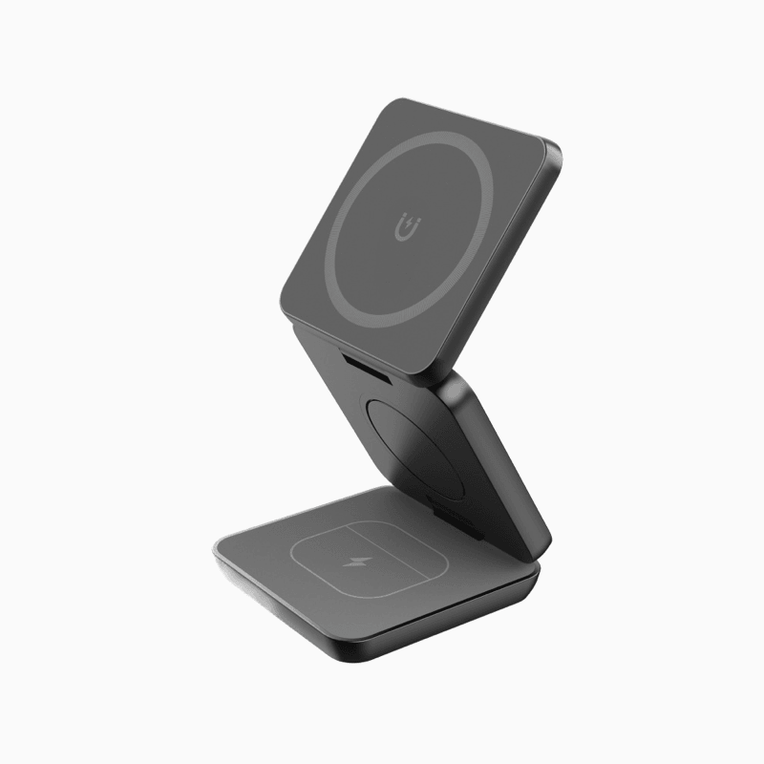
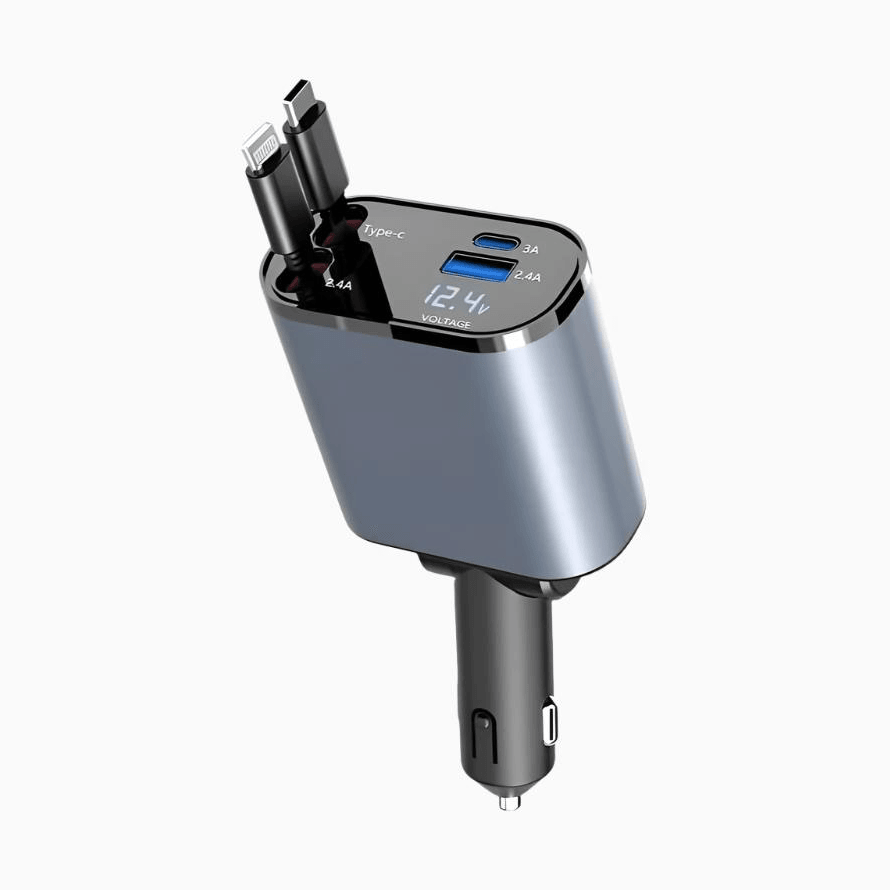
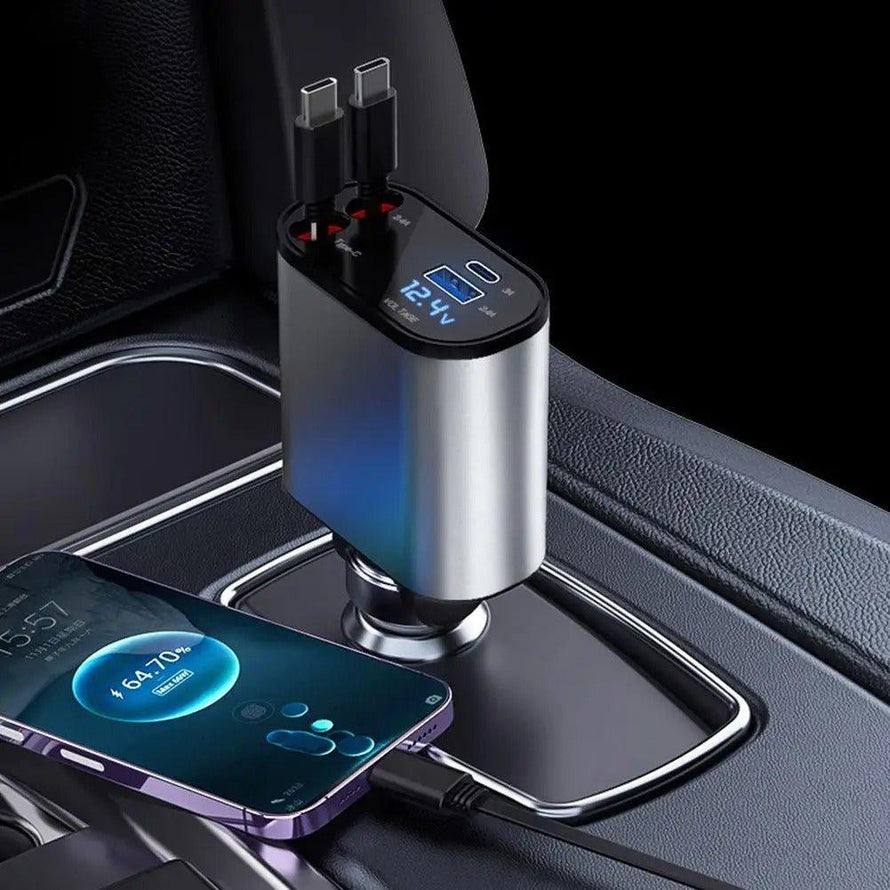
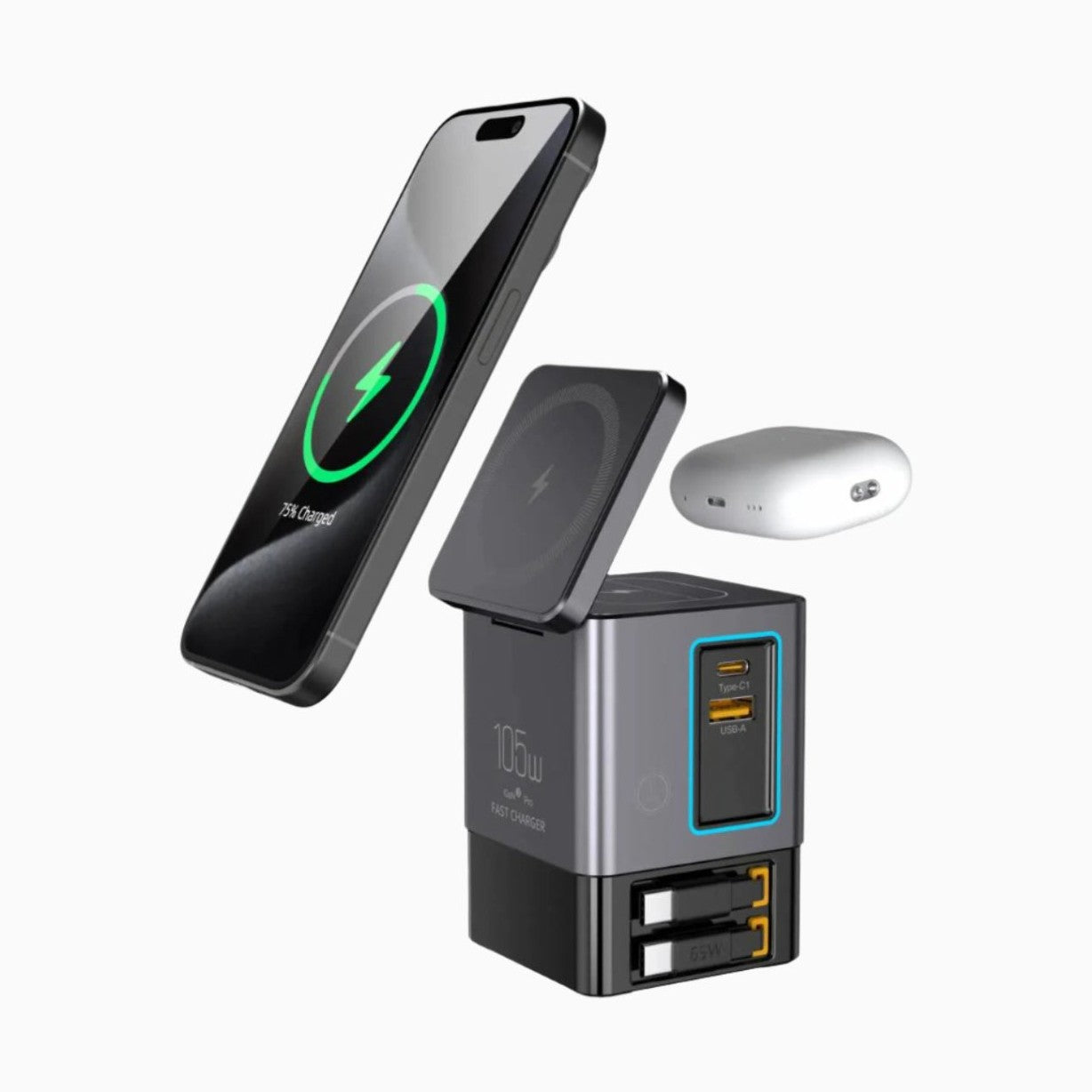
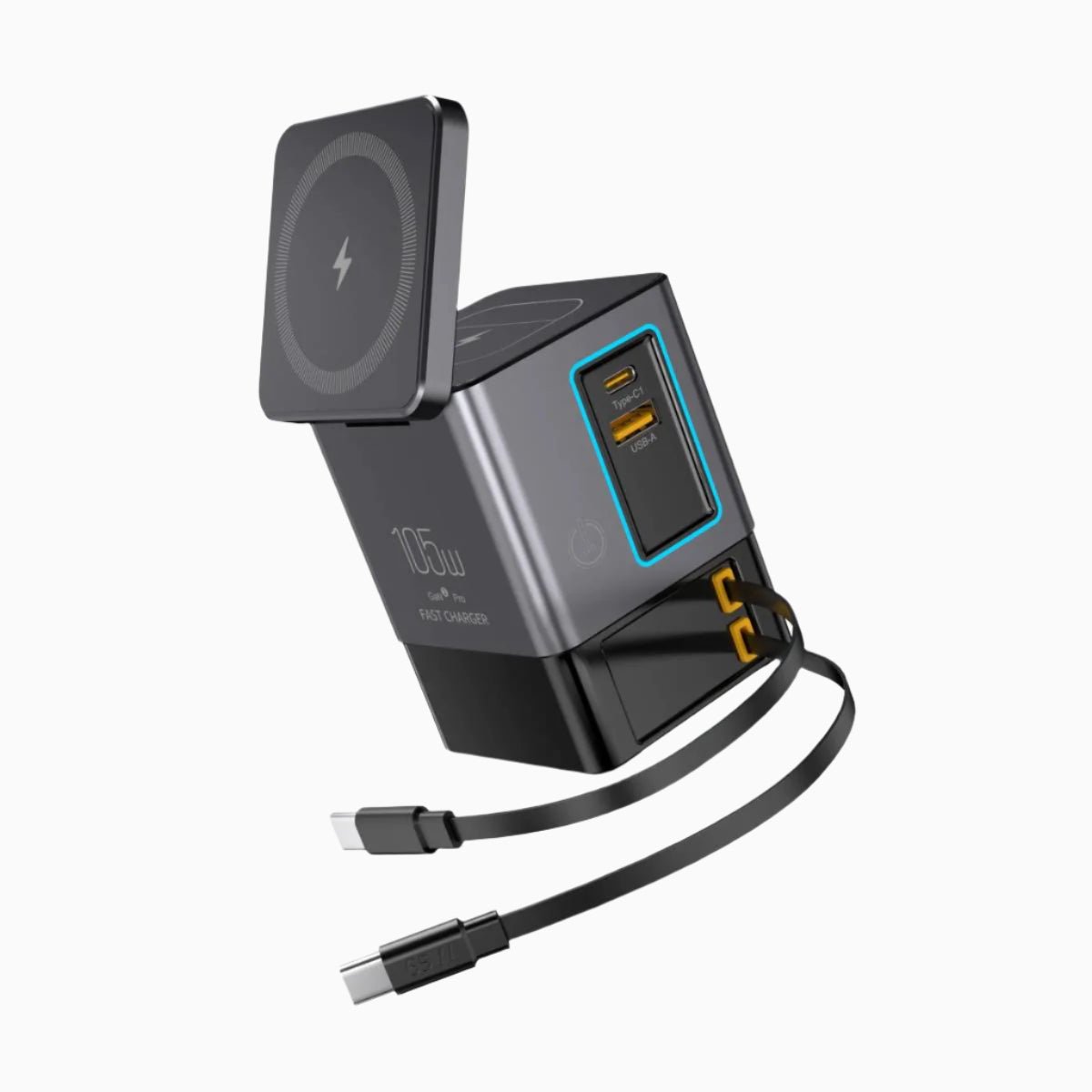
Check out the NexTECH 65W GaN Fast Charger with Global Travel Adapter for your own setup — a compact, travel-ready charger that powers your MacBook, iPhone, and Apple Watch from a single brick.